
Why Your Skin Barrier Matters More Than Any Serum You're Using
You've probably heard a lot about the skin barrier recently. It has become one of those terms that gets used constantly in skincare marketing, barrier creams, barrier serums, barrier-supporting cleansers. But underneath the buzzword is a concept that Traditional Chinese Medicine has understood for a very long time: that healthy skin depends on what is happening beneath the surface, not just what you put on top of it.
If your skin feels tight, reactive, perpetually dry, or prone to breakouts despite a diligent routine, there is a good chance your barrier is compromised. Understanding why and what actually helps, requires looking at the skin differently.
What the skin barrier actually is
The skin barrier is the outermost layer of your skin. Its job is to keep moisture in and environmental aggressors out. When it is functioning well, skin feels comfortable, looks even, and holds hydration without needing to be constantly topped up. When it is compromised, the reverse happens: moisture escapes, irritants get in, and the skin becomes reactive, tight, flaky, or prone to inflammation and breakouts.
A damaged skin barrier is increasingly common, and one of the main reasons is the skincare industry itself. Overuse of acids, retinoids, harsh cleansers, and exfoliants strips the barrier faster than it can repair. The irony is that many of the products marketed as treating skin concerns are simultaneously making the barrier more vulnerable to them.
What TCM sees when it looks at barrier damage
Traditional Chinese Medicine does not use the term skin barrier, but the principles behind it are deeply embedded in how TCM approaches skin health. In Chinese Medicine, the skin's ability to stay balanced, resilient, and well-nourished depends on two things: adequate nourishing fluids in the body, and healthy blood circulation to deliver them.
When the body is deficient in nourishing fluids, what TCM calls a Blood or Yin deficiency, the skin becomes dry, dull, and unable to retain moisture regardless of how much topical hydration you apply. As Vivian, founder of Zilch Formulas, explains it: "A lot of people say they are using hyaluronic acid and their skin still feels dry. This is a sign their skin is crying out for oil and will not be fixed by a hydrating serum alone."
This is the TCM perspective expressed in modern terms. Skin needs both water and oil to be balanced. A serum addresses the water component. Without adequate lipids — from both topical sources and internal nourishment, the moisture cannot be retained.
The difference between dry skin and dehydrated skin
This distinction matters more than most people realise, because confusing the two leads to using the wrong products and wondering why nothing works.
Dehydrated skin lacks water. It is a temporary condition that can affect any skin type, including oily skin. Signs include tightness, dullness, and fine lines that appear when the skin is pressed. Hyaluronic acid and water-based serums address dehydration.
Dry skin is a skin type, not a condition. It lacks oil, or lipids. It requires oil-based products to supplement what the skin is not producing naturally. If you apply a hydrating serum to dry skin without following it with an oil or moisturiser that contains lipids, the water simply evaporates. The skin feels momentarily better and then tighter than before.
For skin to be truly balanced, it needs both. A routine that only addresses one side of this equation will always feel like it is falling short.
Why the internal picture matters as much as the topical one
Here is where the TCM perspective becomes most useful. In Chinese Medicine, the skin is considered a reflection of the body's internal health. The facial tissue feeds nutrients and oxygen to the skin from beneath, which means that if your circulation is sluggish or your body is deficient in nourishing fluids, the skin above will show it, regardless of how much you invest in skincare.
"You will be throwing good money down the drain using an expensive face cream if your skin cannot absorb and retain hydration," says Vivian. "It is basically the same as watering a plant with a dried-up root system and expecting good results."
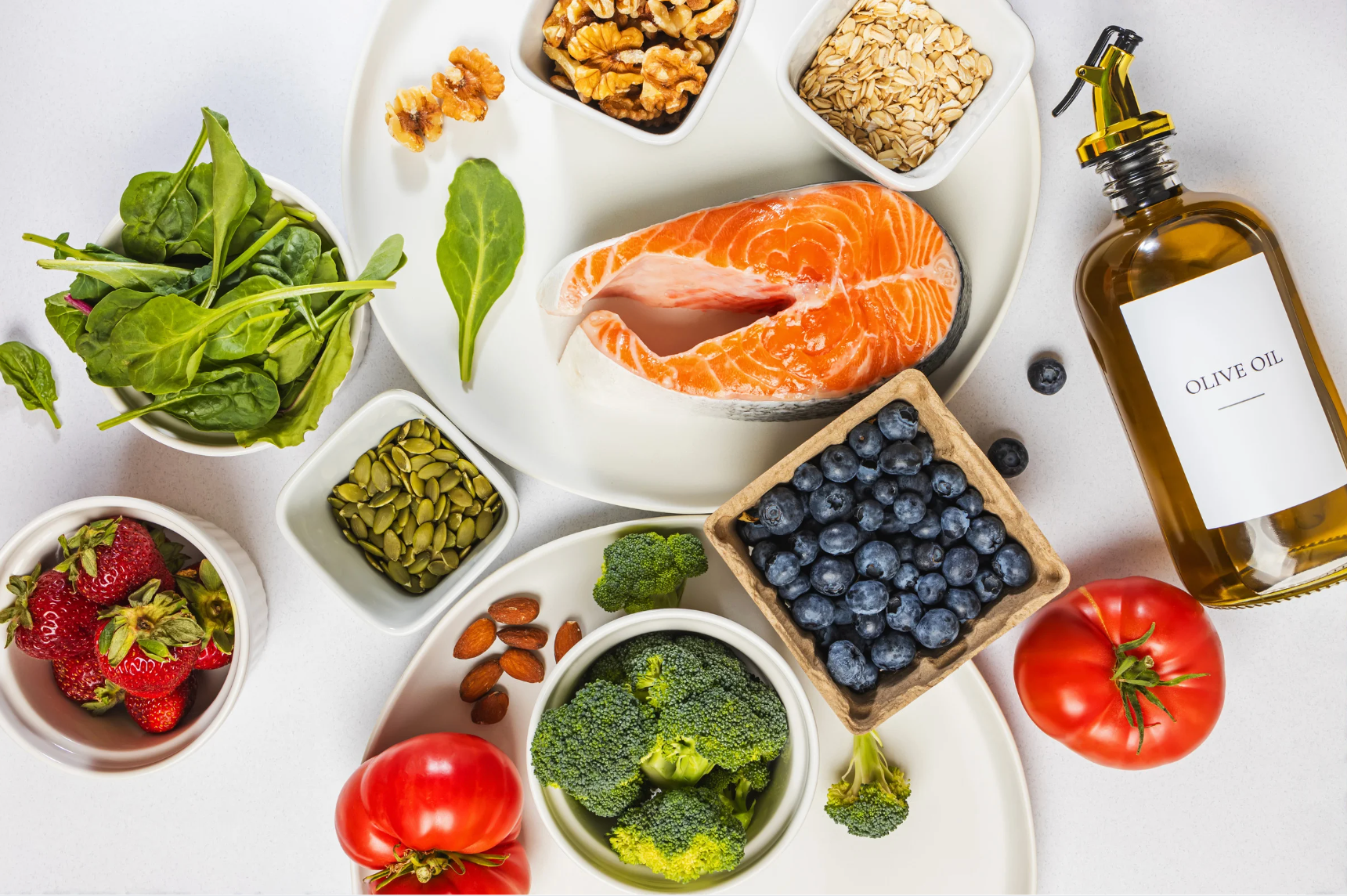
This is why addressing skin barrier health from the inside out matters. Foods that nourish the skin in TCM include pears, melons, tofu, spinach, mushrooms, sesame seeds, goji berries, almonds, and mung beans, all considered nourishing to the body's fluids in Chinese Medicine. Supporting blood circulation through movement, facial massage, Gua Sha, and acupuncture all help deliver those nourishing fluids to the facial tissue more effectively.
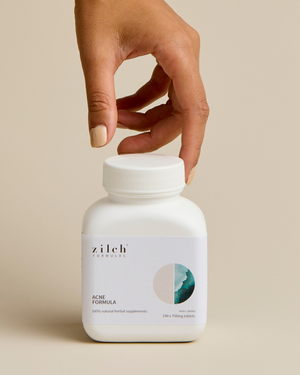
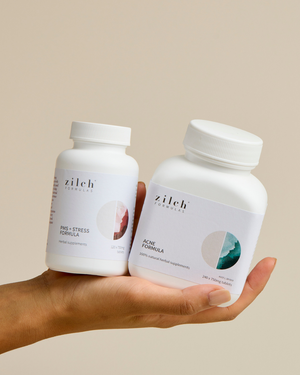
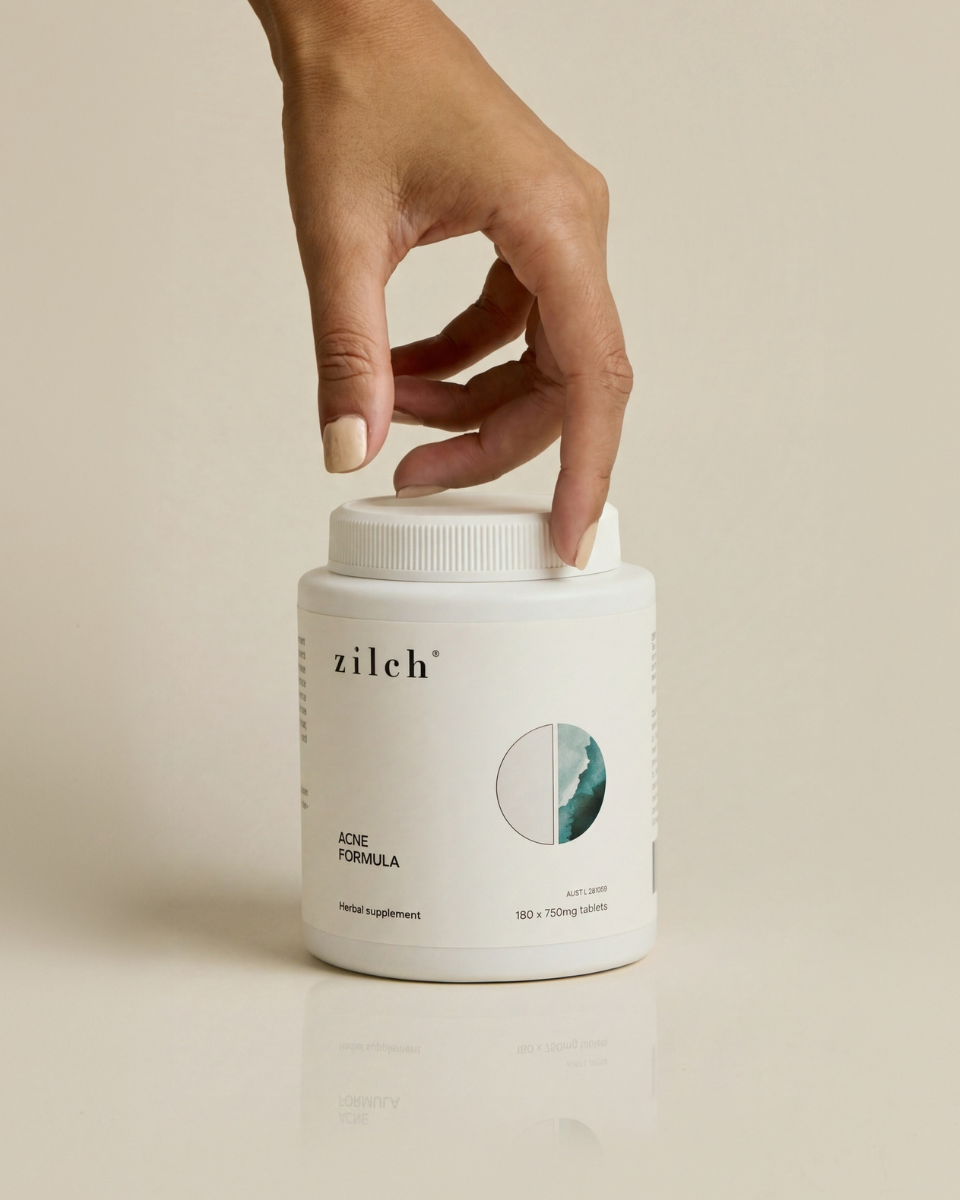
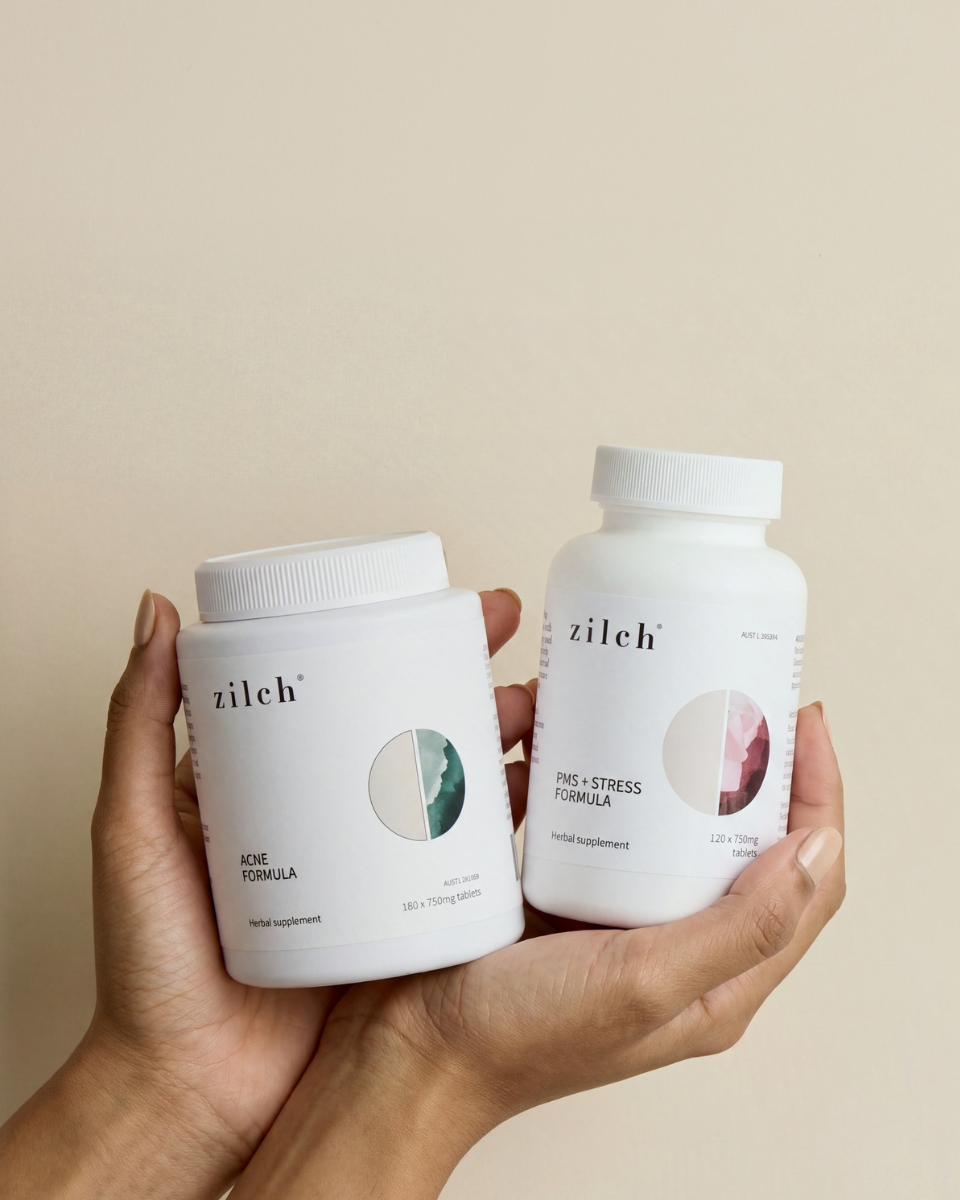
From a supplement perspective, the herbs in Zilch Acne Formula include Chinese Angelica Root, which is traditionally used in TCM to promote healthy tissue repair and support skin healing from within. For those whose skin barrier issues overlap with hormonal patterns, reactive, inflamed skin that worsens before a period, for example, the internal nourishment approach becomes even more relevant. You can read more about the connection between hormones and skin health in our Ultimate Skin Guide.
What to do topically
None of this means topical products are useless. It means they work best when the internal foundation is also being addressed. For the barrier specifically:
Simplify before you add. If your skin is reactive or compromised, stripping back your routine is often more effective than layering on more products. Fewer active ingredients, gentler cleansing, and consistent moisturisation gives the barrier space to repair.
Use oils, not just serums. For dry or lipid-deficient skin, a facial oil or moisturiser with ceramides or fatty acids is more appropriate than a hydrating serum alone. Good options for non-comedogenic facial oils include jojoba, hemp seed, and rosehip.
Avoid over-exfoliating. Acids and physical exfoliants have their place, but used too frequently they break down the barrier faster than it can rebuild. For acne-prone skin especially, the instinct to scrub and strip is often counterproductive. Skipping moisturiser in the belief that oily skin does not need it creates the same problem, dry skin signals the body to produce more oil, which combined with dryness creates the conditions for breakouts. As Vivian explains: "Overproduction of oil plus dry skin equals a clogged mess."
The bigger picture
The skin barrier is not something that can be fixed from the outside alone. It is the result of what your skin is receiving from beneath, the nourishment, circulation, and internal balance that either support or undermine it. A serum can help at the surface level, but it cannot replace what the body provides from within.
Understanding that is the starting point for skin that stays healthy rather than skin that constantly needs managing.
Want to support your skin from the inside out? Explore the Zilch Formulas range and discover how TCM-based herbal supplements can complement your skincare from beneath the surface.

Written by Zilch Formulas